
Stored water from Hagg Lake and Barney Reservoir is essential to keeping the Tualatin River cool, healthy, and flowing
The arrival of warm and dry weather and a hot forecast ahead prompted Clean Water Services (CWS) to begin releasing cool water on May 12, 2026.
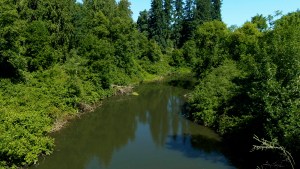
The Tualatin River is a vital source of water for Washington County communities, crops, and companies. To keep the Tualatin River flowing and healthy in dry months, CWS releases cool water from Hagg Lake and Barney Reservoir. Scientists closely monitor the river to determine when more water is needed to sustain water quality and the ecology of the watershed.
“The 2025-26 winter was warm with higher-than-average temperatures combined with low snow and precipitation. May is forecasted to be warm and dry, so flow releases started earlier than in recent years. But Hagg Lake and Barney Reservoir are at capacity, meaning we are in good shape for this summer,” said Water Resources Analyst Jake Dombrowski. “Warm and dry trends are expected to continue throughout the summer, so starting the season with a full supply of stored water to release to the Tualatin River is a good thing for our water quality and our community’s water needs.”
In an average year, CWS releases about 30 million gallons of water per day to maintain sustainable base flows, cool temperatures, enhance water quality, and provide habitat for fish and wildlife. By late summer, more than 70 percent of the flow in the lower Tualatin River is from stored water releases from Hagg Lake and Barney Reservoir, and from CWS’ water resource recovery facilities in Forest Grove, Hillsboro, and Tigard. See the Tualatin River Flow Diagram (PDF).
“This summer looks to be hotter and drier than previous years, so we are expecting higher water demand for irrigation and drinking water while stream flows are lower. Our goal is to manage flow releases to minimize the impacts of those demands on the river,” Dombrowski continued. “Stored water management is a balancing act that takes weather forecasts, stream flow, and anticipated demand of the river into account.”
Did You Know?
Because the Tualatin River is so small, slow, and sensitive, CWS operates under some of the most stringent water quality standards and innovative management techniques in the nation to ensure the continuous improvement and protection of the river. Learn about our first-in-the-nation approach to protecting the region’s water.
Knowing when and how much water to release is an intricate balancing act based on stream flow, irrigation and water supply withdrawals, weather, water quality conditions in the Tualatin River, and the amount of water in the reservoirs. A network of continuous monitoring data from the United States Geological Survey, Oregon Water Resources Department, and CWS helps determine when and how much water is released. CWS coordinates with the Joint Water Commission (which provides drinking water to several cities in Washington County including Hillsboro, Beaverton, and Forest Grove), the Tualatin Valley Irrigation District, the Oregon Water Resources Department, and the Lake Oswego Corporation to maintain stream flow.
CWS was one of the original investors that built Hagg Lake’s Scoggins Dam in the early 1970s for agricultural irrigation, drinking water, and flow enhancement. With the Joint Water Commission, it expanded Barney Reservoir in 1998 to secure additional stored water. CWS has access to 24% of the stored water in the Tualatin River Watershed. The stored water is used to enhance stream flow, provide habitat, and improve water quality in the Tualatin River Watershed.
Clean Water Services is a public utility that provides wastewater and stormwater services to more than 600,000 people across the Tualatin River Watershed in Oregon. This includes urban Washington County and parts of Multnomah and Clackamas counties.
Every year, we clean more than 27 billion gallons of used water from homes, businesses, and industrial settings. In the process, we recover energy and valuable nutrients from wastewater that can nourish soil and crops, then return water to the Tualatin River so it can be used again. We also filter and slow the flow of stormwater runoff before it enters stormwater systems, to help reduce pollution, flooding, and streambank erosion.
Our work helps protect public health and the future of the Tualatin River and everyone who depends on it.
