How Clean Water Services is Investing in Underground Infrastructure to Prevent Overflows and Protect Public Health
Making sure sewage stays inside the pipes that take it to treatment facilities is obviously a very good thing for the health of all of us and our environment. Less obvious, but also essential, is keeping water outside those pipes from entering them. This is why Clean Water Services is working to prevent Inflow & Infiltration (I&I) across the region.
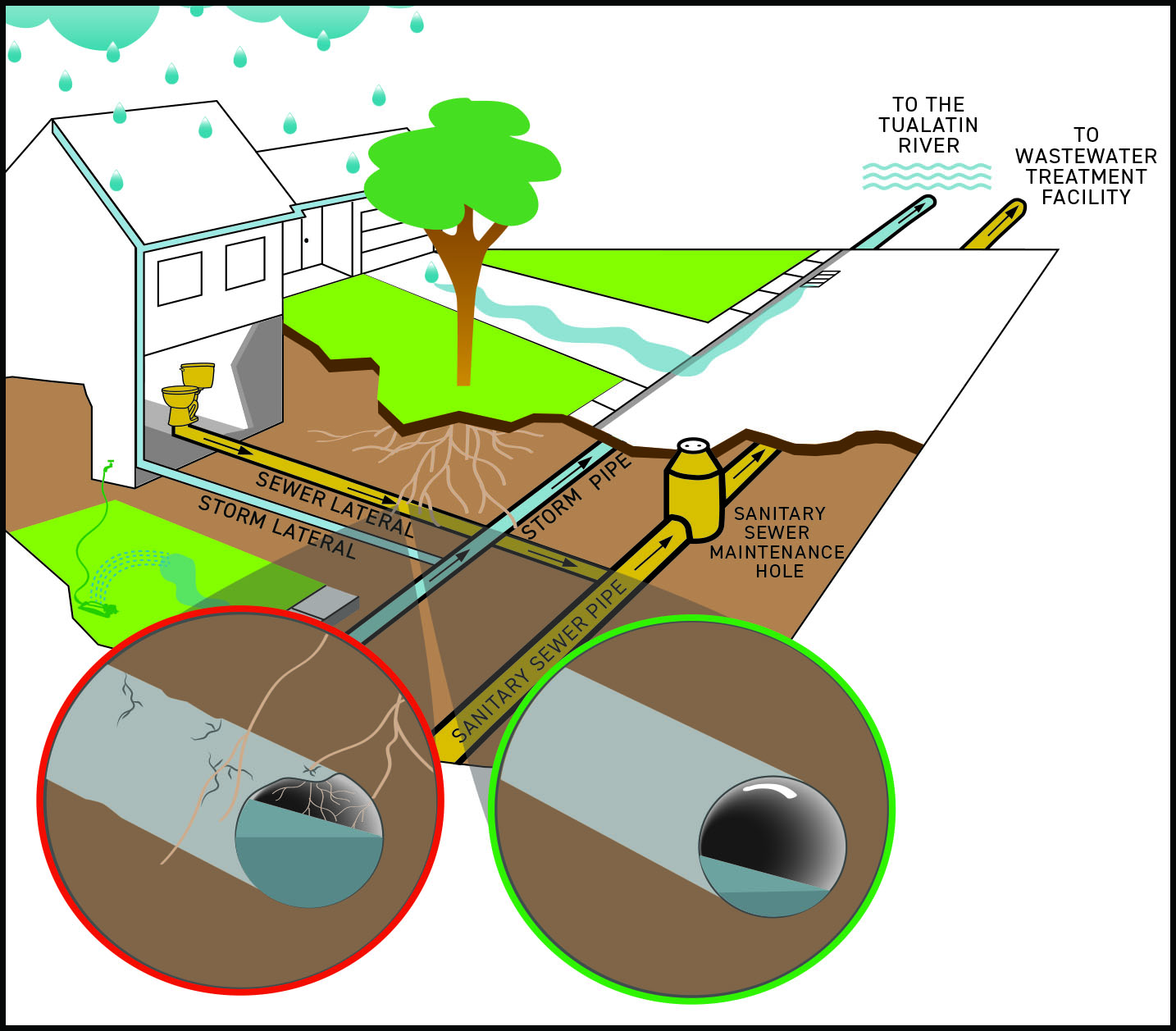
Infiltration is when ground water seeps into underground sanitary sewer pipes. Inflow is when surface water, typically from heavy rain or snow, directly enters the sanitary sewer pipes from above ground. Sanitary sewer pipes are designed to carry only wastewater from homes and businesses to treatment facilities. When I&I occurs, surface water and groundwater mixes with sewage, increasing the volume of water that needs to be treated at the facility. I&I can also overwhelm the system, forcing sewage to overflow into the environment, or, in some cases, back up into homes through toilets and drains. This creates a greater risk of sewage entering the local environment, impacting habitat and public health.
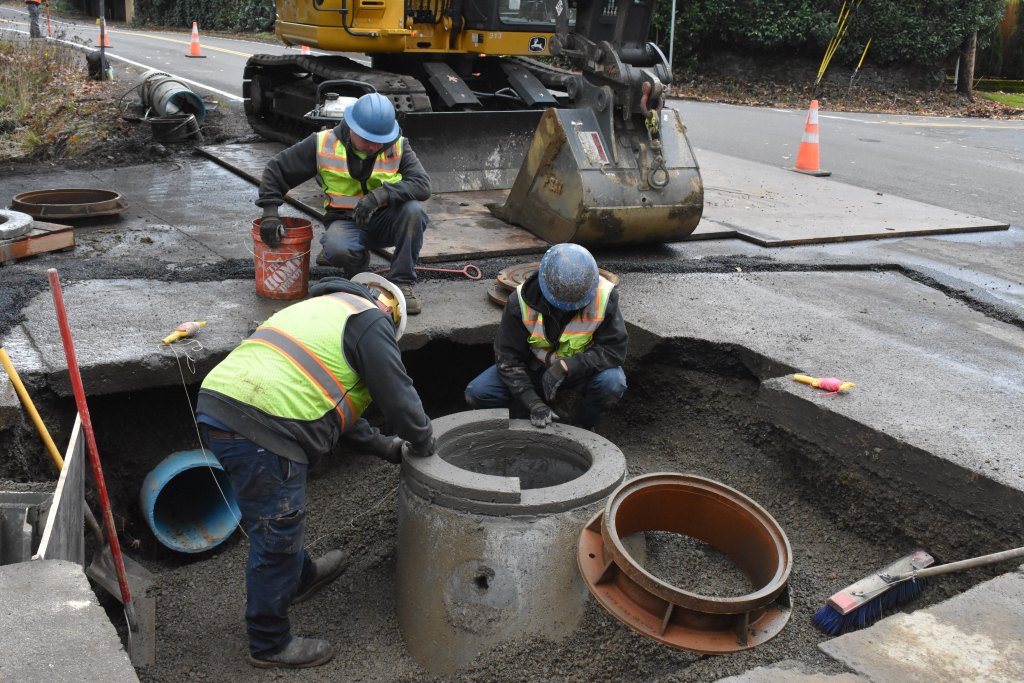
Clean Water Services operates and maintains 1,900 miles of sanitary sewer pipes in the Tualatin River Watershed. These pipes carry wastewater from more than 600,000 homes and businesses in Washinton County to four water resource recovery facilities (WRRFs), where we treat it to nearly drinking water standards before returning the water to the Tualatin River. This system is separate from the 1,500 miles of stormwater pipes that guide surface waters to the nearest waterways.
Many of the sanitary sewer and stormwater pipes in Washington County are decades old — in some cases a century old. These pipes are deteriorating and are susceptible to I&I, or water entering the pipes through cracks, maintenance holes, disconnected joints, and other access points. Tree roots might push through a pipe, for example, allowing groundwater to seep in. Or rain might flow into an improperly installed maintenance hole cover.
Clean Water Services operates a separate sanitary sewer and stormwater system, meaning the pipes that carry wastewater are not connected to the pipes that carry stormwater. While I&I is less common in separated systems than in combined ones, it becomes more likely as infrastructure ages. To prevent and address I&I, we carefully plan upgrades to critical infrastructure across the watershed. This long-term planning is outlined in a Sanitary Sewer Master Plan.
Communities across the watershed may notice more Clean Water Services projects in their neighborhoods as we embark on major infrastructure improvement projects, some of which are specifically needed to prevent I&I. These investments of ratepayer dollars will help ensure CWS can continue to provide reliable and sustainable sanitary sewer and stormwater services for decades to come.
Want to learn more about projects near you? See our active projects online portal.