
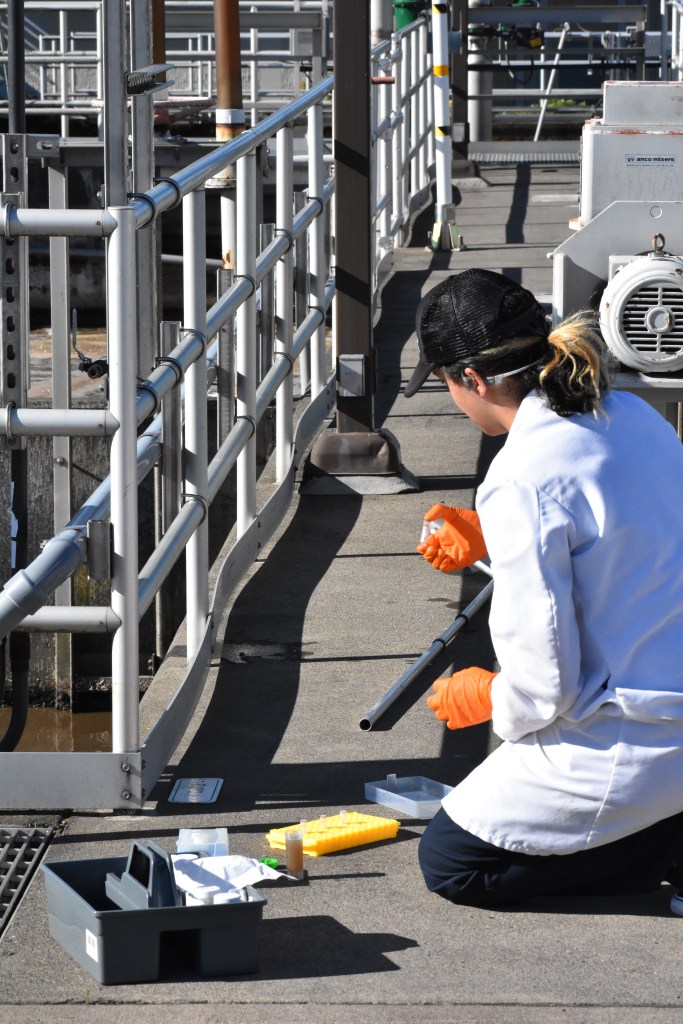
To protect the health of our community, Clean Water Services (CWS) is a national leader among the utilities seeking to identify, address, and reduce per- and polyfluoroalkyl substances (PFAS) in our environment. CWS is conducting research, working with national experts, and helping local industries reduce the amount of PFAS going into our wastewater and ultimately into the Tualatin River.
However, the top sources of PFAS in the Tualatin River Watershed and beyond are from the products many of us use every day, and from the companies that produce them. To protect each other and the environment, we all have an important role to play in reducing the PFAS that enters our water and our bodies.
What are PFAS?
Per- and polyfluoroalkyl substances (PFAS) are a family of more than 10,000 synthetic chemicals widely used since the 1940s in products that resist heat, oils, stains, and water. Even though U.S. manufacturers have voluntarily phased out certain types of PFAS, they are still manufactured overseas and can be imported in consumer goods. Also, many other PFAS compounds are being manufactured today and remain prevalent in many household products and industrial processes.
PFAS are considered “forever chemicals” because they are extremely resistant to breaking down in the environment. This means PFAS can stay in the human body and the environment for a long time. There is growing evidence that PFAS can harm public health, and some PFAS compounds have been linked to an increased risk of cancer. PFAS chemicals are considered an “emerging contaminant of concern” because it wasn’t until about 30 years ago that the technology existed to even detect them at the very low levels typically present.
Where are PFAS?

PFAS are created to be durable, long-lasting, and resistant to heat, water, oil, and stains. They can be found in many different products, including raincoats, non-stick cookware, stain-proof carpet, paints and polishes, laundry products, and cosmetics like mascara. Even food packaging that is made to resist grease can have PFAS. Not all products in these categories have PFAS, but many do.
Products in your home or that end up in a landfill can contribute PFAS to the water cycle, including via wastewater. PFAS currently cannot be completely removed during the wastewater treatment process, so the chemicals make their way to waterways like the Tualatin River.
Since PFAS are present in products we use daily and are found in our food and clothing, trace amounts of PFAS will naturally end up in the environment, including in biosolids, which are among the valuable resources we recover from wastewater. Biosolids would need to be disposed of in a landfill or burned if they weren’t used as fertilizer.
What’s Being Done About PFAS?
Wastewater utilities like CWS are “passive receivers” of PFAS — meaning they don’t produce PFAS but receive them via the public wastewater system. Since 2019, CWS has collected over 1,400 PFAS samples from rivers, creeks, soil, vegetation, our water resource recovery facilities, and the public wastewater system to learn more about the levels and types of PFAS in our water cycle and how they are getting there. We also test and sample both the biosolids we deliver and the soils on farms and rangelands where biosolids are applied for 40 different PFAS compounds using EPA’s standard methods.
For more details about our PFAS research, watch the presentation our PFAS team presented to the Clean Water Advisory Commission in March of 2025. You can also view the presentation slides in the meeting agenda.
The Environmental Protection Agency, the Oregon Department of Environmental Quality, and other federal and state entities are continuously studying PFAS to determine how best to keep them out of the water cycle, such as through further regulations on PFAS contributors. In the meantime, CWS is contributing to that research and working with commercial and industrial businesses in the region to identify and reduce PFAS in their discharges.
Resources
From CWS:
PFAS Basics
PFAS and Commercial Businesses
PFAS for Semiconductor Industries
PFAS and Metal Plating and Finishing Industries
Other useful sources:
PFAS policy tracker
What you can do (Spanish)
Understanding impacts to health (Spanish)
PFAS in Oregon
PFAS and Phthalate Reduction Project
PFAS in the United States
PFAS and Metal Plating and Finishing, additional information
PFAS industrial uses
PFAS industrial sources
Best practices for industrial stormwater discharges
PFAS and Water Utilities