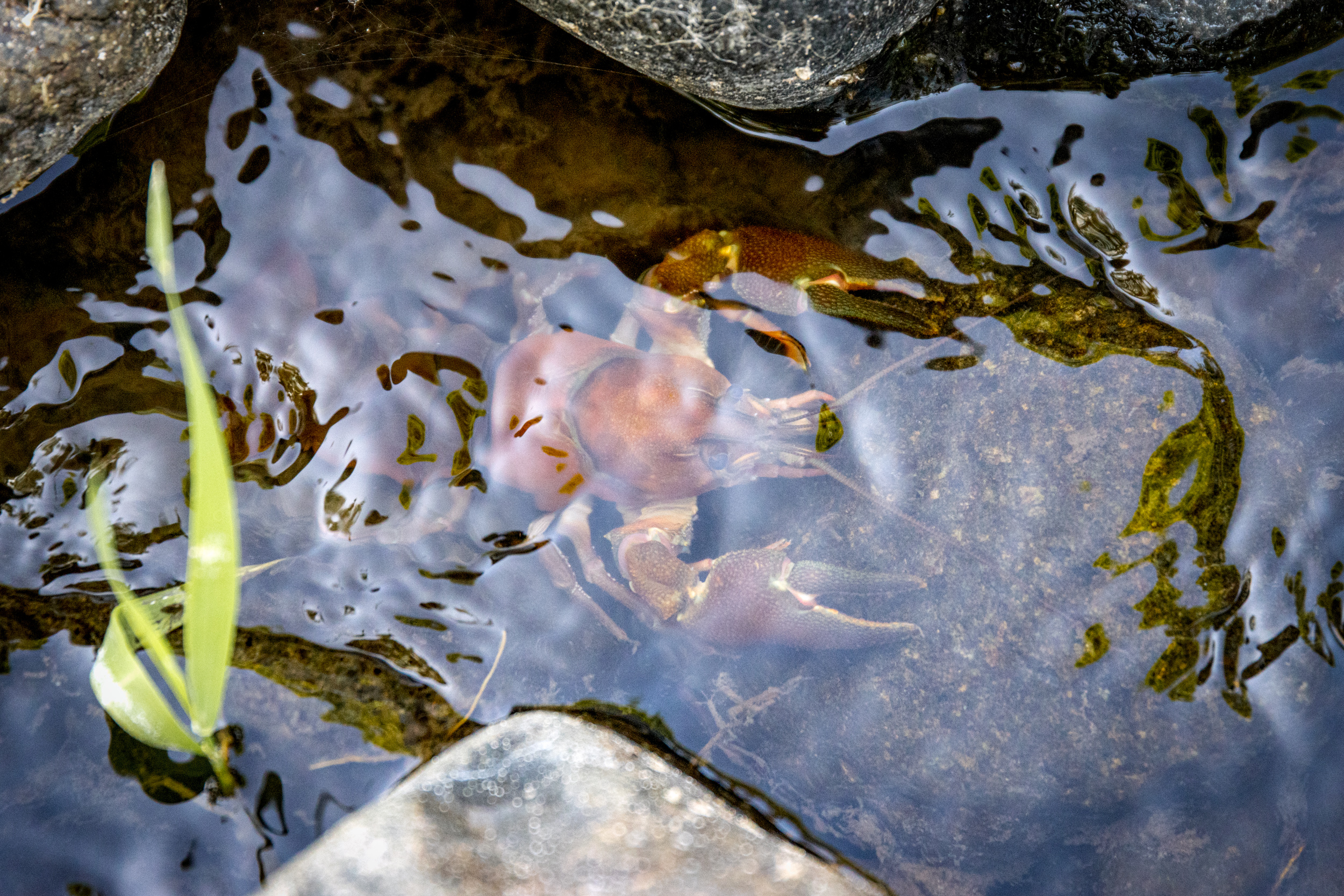
Hay muchas formas diferentes en las que el cauce hidrográfico nos habla, si sabes escucharlo. En Clean Water Services (CWS), trabajamos siempre para entender las necesidades del cauce hidrográfico del río Tualatin. Una forma en que aprendemos del entorno es preguntando: “¿Quién o qué ha estado aquí?” Dado que no podemos tocar en la puerta de una presa de castor o tocar la campana de una trucha, CWS está utilizando una nueva técnica para traducir el lenguaje del cauce hidrográfico.
When our rivers and streams are healthy, local wild and aquatic life thrive. The presence of certain species can tell us a lot about the water and the habitat surrounding it. For example, if there are many diverse species of macroinvertebrates, we know the water is healthy enough to support those populations. If there are fewer macroinvertebrate species that are also known to survive well in polluted water, more investigation may be needed.
We don’t need to see the species to know they’ve been in the water or in a tree. Our scientists can find entire fish populations or swarms of insects without ever seeing one swimming or flying. We do this by collecting environmental DNA, or eDNA. We find eDNA through the feces, mucous, and shed skin and hair of organisms. This makes it easier to detect small, rare, or even shy species, and gives us a better idea of how healthy or under threat our watershed is.
“Environmental DNA, despite being relatively new as a discipline in science, is pushing the envelope for how we can track the distribution and seasonal movements of individual organisms and communities as a whole,” said Hannah Ferguson, an Operations Specialist in the Water & Engineering Technology Department. “CWS is using eDNA to provide a data-driven, cost-effective means to evaluate the effects of our collaborative management of water resources in the Tualatin River Watershed. This includes studies tracking the spread invasive species like EAB, movements of impaired native species like Pacific lamprey and Coho salmon, as well as evaluating water quality through eDNA-based metrics rather than traditional macroinvertebrate metrics.”
Pacific Lamprey Return After Dam Removal
Using eDNA monitoring, CWS has detected Pacific lampreys in the section of Gales Creek opened up by the removal of the Balm Grove Dam. The concrete structure blocked fish from traveling upstream for decades — from the 1930s when the dam was installed to create a swimming hole, to 2022, when CWS was part of a partnership to achieve the long-held goal of restoring fish passage, which is an indicator of good water quality. Prior to dam removal, no lampreys were detected upstream of the dam. It’s an impressive comeback for lamprey, illustrating the resilience of life when natural systems are restored.
¿Sabías?
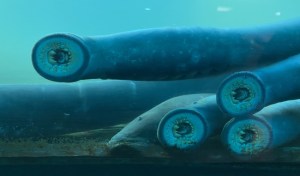
Pacific lampreys are a culturally significant species to Native nations of the Pacific Northwest and are considered a first food. They play an important role in Northwest waterways, acting as an “ecosystem engineer” and an indicator of seasonal change.
Photo courtesy of USFWS
The eDNA of EAB
The Oregon Departments of Forestry and Agriculture (ODF, ODA) confirmed the presence of the emerald ash borer (EAB) in Forest Grove in 2022. In the years since, partners across the state have mobilized and collaborated to address the consequences of this destructive beetle. The EAB threatens Oregon’s ash trees, which are the primary source of shade for the Tualatin River. Without shade trees, the water is at risk of becoming too warm to support native wildlife.

CWS, ODA, and ODF are working together to identify EAB infestations by collecting eDNA. When developing this new method in 2025, ODF staff visited six ash trees and six oak trees from an infested park in Forest Grove and ran sterile paint rollers up and down the bark, hoping to collect bits of EAB eggs, feces, and body parts. This process was repeated at a park in Wilsonville, an area not known to be infested with EAB. After ODA filtered the collected materials, staff in the CWS Molecular Lab ran DNA tests on the samples.
Using eDNA to confirm the presence of EAB is not only an easier and less damaging method than cutting the tree but may also help surveyors detect infestations earlier as an alternative to traps or waiting for signs of tree decline.
Matt Mills with ODA uses a sterile paint roller to collect EAB eggs, feces, and body parts from a tree known to be infested by the destructive beetle.
Protecting Water Quality
Whether we’re looking for beneficial fish or invasive insects, using eDNA to “listen” to the watershed is among the many tools, tactics, and innovations we use to protect water quality, public health, and the environment.
But we can’t accomplish that mission alone. The actions you take in your home or yard or even at a campground can have great impacts on local streams and the Tualatin River — and on the people, businesses, plants, and wildlife that depend on them. Here are some of the things you can do to protect water we all share:
- Learn how to identify ash trees on your property and report suspected infestations.
- Buy firewood where you burn it, and never transport firewood more than 10 miles from where you gathered or purchased it.
- Explore natural home and yard care treatments that protect our neighborhood streams. Remember, storm drains in Washington County do not lead to a treatment facility — they lead directly to a local waterway and eventually to the Tualatin River. What goes on the ground, goes to the river.
- Protect the infrastructure that protects water quality by properly disposing grease, leaves, wipes, hazardous household waste, and more.
- Plant native species, which are adapted to our climate and soils, require less water and maintenance, and grow deep, complex root systems that hold soil in place and prevent erosion. Adding native plants is important in urban and suburban areas where wildlife habitats have been broken up by urban growth.
Stay informed and connected. Sign up for our monthly e-newsletter for information, tips and tricks, and updates from Clean Water Services.